
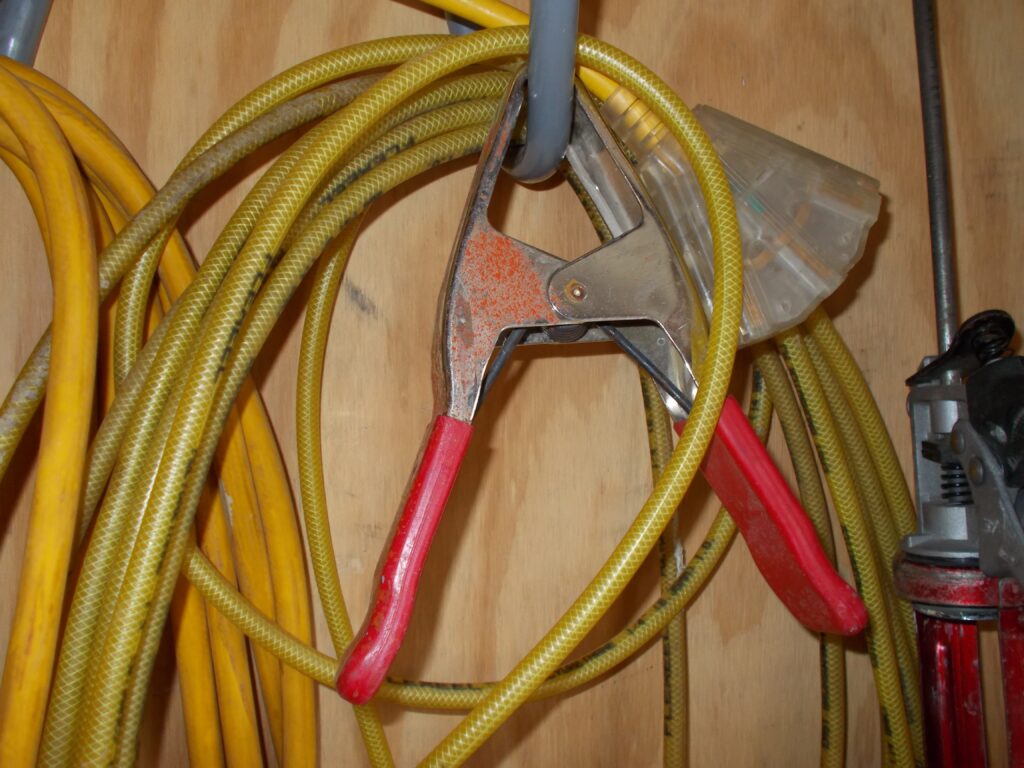
Some people connect generators and heavy tools to low-amperage extension cords. Substandard cords have thin wires and can only transmit limited amperage. Heavy-duty equipment draws more than the extension cords can output, causing the wires to overheat and the covers to melt. The result is a safety hazard and slowed business or household operations.
A 10/3 extension cord uses 10 AWG conductors and is available in configurations designed for demanding applications. Its suitability depends on the cord’s amperage and voltage ratings, length, connectors, and intended use.
This guide explains how conductor size, electrical capacity, grounding, voltage drop, and jacket construction affect the performance and safe use of a 10/3 extension cord.
1. Uses Thicker Wires to Prevent Overheating
Thin wires can barely handle higher loads, especially machines, power tools, and generators. Thin wires overheat under heavy loads, which can burn the plastic cover and cause fire hazards. Most fires in household and industrial areas are because of overloaded thin cords.
A well-designed 10/3 extension cord has a thicker copper wire, allowing electricity to flow with less resistance. The smooth flow of electricity inside the cords ensures the wires are cool even under heavy loads. Its unique capability ultimately reduces the melting of plastic covers.
2. Higher Capacity for Handling Bigger Loads

Standard extension cords are limited to 15 amps of power. Lower handling capacity means the cords can barely handle more than two pieces of equipment. The power needs of multiple devices usually exceed the cord limit. The overload can make the power cord unsafe and damage connected tools.
This high-amperage power cord has a higher capacity and can handle up to 30 amps on shorter lengths. The cord is what you need to power two 15-amp power tools or machines without strain. The higher capacity often comes from the thicker copper wires inside the cord, built to handle more load and stay safe even when powering several loads.
3. Reliable Power for Generators
Many commercial facilities and job sites rely on backup generators during unexpected power outages or when operating completely off-grid. However, industrial generators generate substantial electrical output that far exceeds the safe current-carrying capacity of standard extension cords. Routing heavy electrical loads through conventional wiring causes extreme heat buildup and voltage drops, exponentially increasing the risk of insulation breakdown, equipment damage, or complete power failure during prolonged operation.
To safely distribute high-amperage current in demanding commercial and industrial environments, operators deserve specialized, heavy-duty electrical cabling designed to match generator output. A 10/3 extension cord has special engineering for this purpose, utilizing thick 10-gauge copper conductors to deliver high-amperage power directly from generators to heavy-duty tools and industrial appliances across the job site. Encased in durable, weather-resistant protective jackets, these heavy-duty cords minimize electrical resistance and dissipate heat. This allows them to sustain continuous, uninterrupted power transmission under heavy electrical loads without straining equipment.
4. Superior Power Delivery Over Long Distances

Electricity loses voltage in long, thin cords, leaving connected tools with insufficient power. As a result, internal motors work harder and run slower, reducing performance. The problem usually worsens with longer cords.
These heavy-duty cords feature thicker wires with lower resistance to maintain full voltage over distances exceeding 50 feet. Connected tools and appliances receive full power and run at standard speeds. This allows motors to stay cooler and last longer during extended use.
5. Ground Wires Improve Workplace Safety
Tools and machines can break during normal hours of heavy use, making electricity flow the wrong way. Incorrect electricity flow is more likely to cause serious shocks to the people using the machines. The risk becomes higher in wet conditions and outdoors or when the cords have no grounding.
Advanced power cord models have a special ground wire functioning as the third conductor. The wire helps redirect the fault electricity back to the outlet. High-performance circuit breakers trip unexpectedly to stop potential dangers. Leveraging these power cords can help people stay safe when using high-power equipment.
6. Strong Jackets that Survive Outdoor Conditions

Outdoor applications usually expose power cords to rough ground, cold, oil, and rain. Many substandard cords crack during freezing weather and can easily get damaged by oil. Damaged covers expose the live wires, increasing the risk of short circuits and shocks.
High-quality and reliable power cords use robust SJOOW or SJEOW jackets. The jackets are flexible and efficient even in cold conditions. Their unique capabilities allow the cables to resist oil and shield the wires inside from water damage. Copper components inside the cords remain safe despite the changing weather conditions.
Wrapping Up
Choosing the right extension cord is essential for reliable equipment performance and electrical safety. A properly rated 10/3 extension cord can support demanding applications when its electrical specifications, length, connectors, and jacket type match the equipment and working environment.
Before use, check the cord’s ratings, inspect it for damage, and follow the manufacturer’s instructions. For outdoor or workplace applications, use appropriate grounding and ground-fault protection where required. Selecting the right cord helps reduce electrical risks and supports dependable operation.