
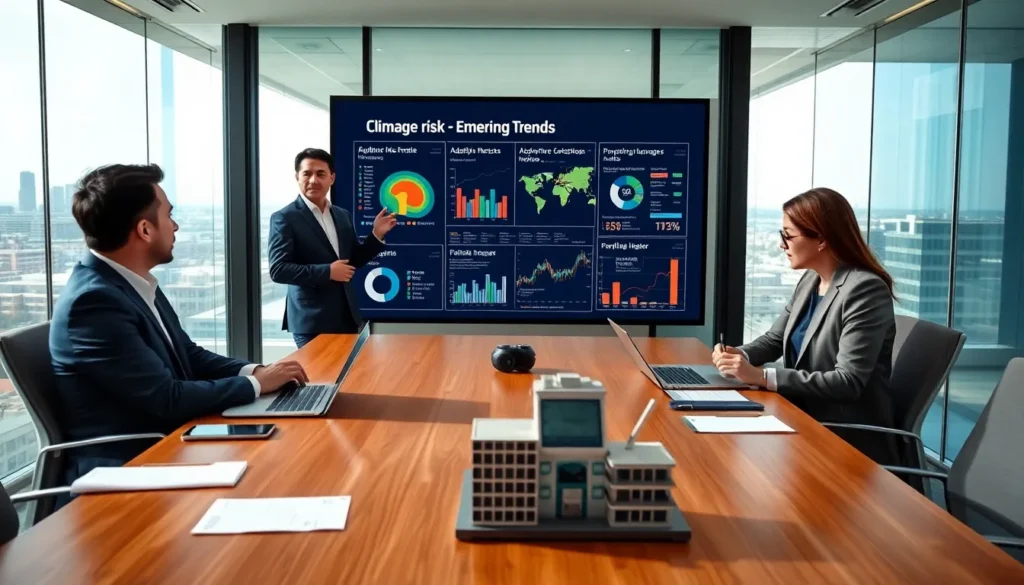
ULI emerging trends guide investors and developers. The report shows shifts in climate, reuse, work patterns, and capital. Readers will learn the main forces that shape real estate decisions. The following sections present clear findings and practical implications.
Key Takeaways
- Investors and developers should use the ULI emerging trends to prioritize climate resilience and budget for retrofits that reduce flood, heat, and insurance exposure.
- Adaptive reuse and mixed-use conversions offer faster delivery, lower embodied carbon, and cost-effective supply—target projects with flexible floor plates and favorable local incentives.
- Deploy PropTech and AI-driven dashboards to monitor energy, occupancy, and maintenance in real time to cut operating costs and speed decision cycles.
- Adjust asset strategies for shifting demand in workplaces, retail, and multifamily by prioritizing walkability, hybrid-office flexibility, and experiential retail formats.
- Incorporate public-private partnerships, blended finance, and inclusionary policies into project planning to close funding gaps and improve affordability while managing execution risk.
Macro Forces Shaping Today’s Real Estate Landscape
Physical climate events affect asset values and underwriting. Lenders adjust loan terms and investors change hold periods. Demographic shifts alter demand for housing and retail. People age and move to different regions. Technology changes construction methods and tenant expectations. Firms adopt new tools and workers change location choices. Policy decisions influence zoning and tax incentives. Cities update rules and governments set priorities. Global capital flows affect pricing in core and secondary markets. Investors move capital to markets with clearer rules and higher yields. The phrase “uli emerging trends” appears in industry briefings and strategy notes. Teams use the uli emerging trends report to set priorities. Analysts cite uli emerging trends when they model future rents. Boards ask for uli emerging trends insights during planning sessions. Executives track uli emerging trends to inform asset allocation.
Climate Resilience And Sustainability As Investment Drivers
Investors factor climate risk into acquisition decisions. Funds favor properties with lower flood and heat exposure. Developers select materials that lower operating costs. Designers add passive cooling and shade. Cities require energy performance and they fine noncompliant buildings. Insurers price climate risk and they limit coverage in high-risk zones. Tenants prefer efficient buildings and they seek lower utility bills. The uli emerging trends view links sustainability to long-term returns. Many portfolios now include resilience upgrades. Owners plan for retrofits and they budget for upgrades. The market rewards properties that lower carbon and manage water. Consultants use uli emerging trends data to rank assets by risk. Asset managers use uli emerging trends to justify capital expenditures. Lenders use uli emerging trends to set loan covenants.
The Rise Of Adaptive Reuse And Mixed-Use Conversions
Cities repurpose obsolete offices and they convert them into housing or labs. Developers reduce demolition and they reuse existing structures. Adaptive reuse shortens delivery time and lowers embodied carbon. Municipalities incentivize conversions through tax abatements. The uli emerging trends narrative highlights conversions as a cost-effective supply source. Investors assess location, code challenges, and market fit. Lenders evaluate pro formas and they price execution risk. Architects design flexible floor plates and they allow multiple uses.
Technology And Data: PropTech, AI, And Operational Efficiency
PropTech firms provide tools that track energy and occupancy. Owners deploy sensors and they collect real-time data. Managers use AI to forecast maintenance and they reduce downtime. Brokers use analytics to price leases and they target tenants. The uli emerging trends summary notes faster decision cycles through data. Teams use dashboards to monitor asset performance. Investors use uli emerging trends metrics to compare assets across markets.
Smart Building Upgrades And Energy Management
Owners install smart meters and they monitor consumption. Building systems adjust HVAC and they reduce waste. Tenants interact with apps and they control their environments. Utilities offer rebates and they lower upgrade costs. The uli emerging trends insight ties smart upgrades to tenant retention. Developers include energy management in their pro formas. Managers show energy savings and they attract responsible tenants.
Shifts In Workplaces, Retail, And Residential Demand
Employers change office footprints and they adopt hybrid schedules. Workers choose locations based on commute and lifestyle. Retailers change formats and they emphasize experience over pure retail. Shoppers favor convenience and they buy more online. Multifamily demand shifts by price and amenity. Younger households value transit access and they pay premiums for walkability. The uli emerging trends analysis links workplace change to downtown foot traffic. Cities adjust parking rules and they repurpose curb space. Developers plan flexible retail and they design for community uses.
Affordable Housing, Inclusionary Policies, And Community Impact
Local governments adopt inclusionary zoning and they require affordable units. Developers balance feasibility and compliance. Nonprofits acquire buildings and they preserve affordability. Communities measure impact and they track displacement risk. The uli emerging trends coverage highlights funding gaps and policy solutions. Planners use uli emerging trends examples to design incentive packages. Stakeholders use uli emerging trends data to prioritize projects.
Public-Private Partnerships And New Funding Models
Municipalities partner with private firms and they share development risk. Investors use tax credits and they lower financing costs. Community banks and impact funds provide gap financing. Developers bundle projects and they attract institutional capital. The uli emerging trends note shows more blended finance structures. Public agencies cite uli emerging trends when they offer land or tax incentives. Sponsors reference uli emerging trends to win approvals.
Capital Markets, Risk Pricing, And Emerging Hotspots
Capital shifts toward markets with stable demand and clear policy. Lenders raise spreads for assets with climate exposure. Investors pay premiums for scarcity and they bid on core assets. Secondary markets gain interest for their yield and they offer diversification. The uli emerging trends signal increased dispersion of returns. Portfolios now include a mix of core, core-plus, and opportunistic plays. Analysts watch cap rates and they monitor leverage levels. Funds scout smaller cities and they find undervalued assets. Planners use uli emerging trends to rank regional opportunity. Advisors use uli emerging trends to set weightings by region. Investors use uli emerging trends to stress test portfolios and they adjust risk budgets.